-
Standard dining table height: 71–76 cm (28–30 in), with 76 cm (30 in) being the most common.
-
Chair pairing (seat height): most dining chairs land around 40.6–50.8 cm (16–20 in), which typically fits standard tables.
-
Comfort rule: aim for 25–30 cm (10–12 in) between the top of the seat and the underside of the tabletop for legroom.
-
Space to pull chairs out: allow 36" (914 mm) behind seated diners for basic clearance; 44" (1118 mm) is better where people need to walk behind.
-
Space per person: plan about ~60 cm per guest so elbows aren’t fighting.

Shop the base (Seek & Ramble Dining Tables):
What is the standard height of a dining table?
Most dining tables are built to a “dining height” standard so the average adult can sit comfortably, rest forearms naturally, and cross/uncross legs without hitting the underside.
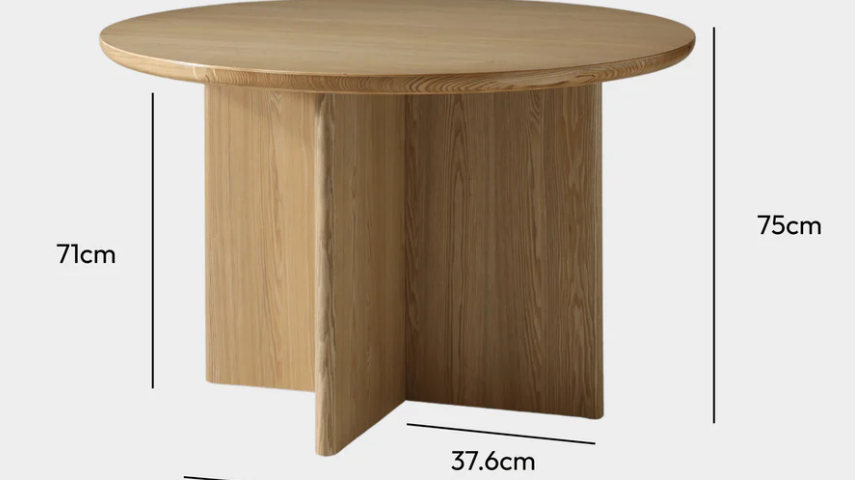
The standard range is 71–76 cm (28–30 inches), and 76 cm is the most common.
Measure it the right way (so you don’t buy the wrong chairs)
When people get pairing wrong, it’s usually because they measured the wrong point.
-
Table height = floor → top of tabletop.
-
Underside height = floor → lowest point under the top (this might be the apron, frame, or support bar).
-
Chair seat height = floor → top of the seat (include cushion “squish” if upholstered).
That underside measurement is the one that decides whether your knees are happy.

The chair pairing rule that matters most (seat height + clearance)
A dining setup feels “right” when your legs have room and your shoulders aren’t creeping up.
The 10–12 inch clearance rule
A solid rule of thumb is 25–30 cm (10–12 in) of space between the seat top and the underside of the table.
What seat height pairs with a standard table?
Because standard tables are ~71–76 cm high, the chairs that usually fit best have seat heights in the “normal dining chair zone.” Dining seats commonly fall in the ~40.6–50.8 cm (16–20 in) range.
Practical shortcut: If your table is ~76 cm high, start shopping chairs around ~45–48 cm seat height (then confirm with the underside clearance).
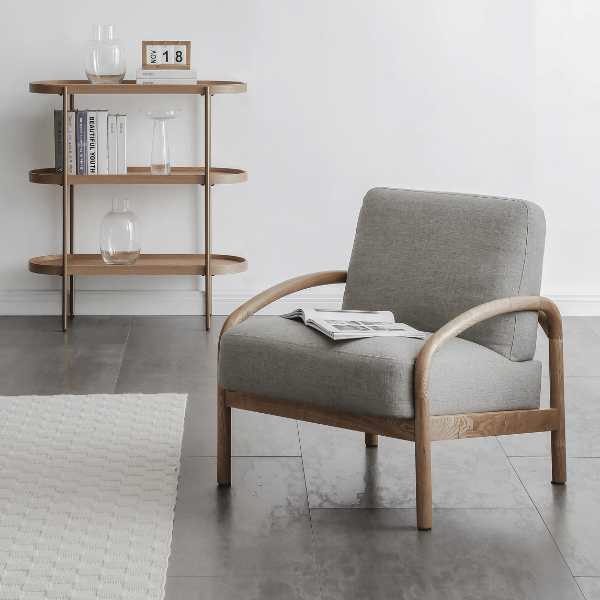
Don’t forget armrests (the hidden deal-breaker)
If you want armchairs at the table:
-
Check arm height vs the tabletop thickness/apron.
-
Many armchairs look perfect but won’t slide under—forcing you to sit too far away.
If you’re mixing chairs (a common designer move), use armchairs on the ends and armless chairs along the sides.

Standard vs counter vs bar height (know the difference before you buy)
Not every “dining table” is actually dining height.
|
Table type |
Table height |
Typical seat type |
Best for |
|
Standard dining height |
71–76 cm (28–30 in) |
Dining chairs |
Everyday meals + hosting |
|
Counter height |
~86–91 cm (34–36 in) |
Counter stools |
Kitchen-adjacent casual dining |
|
Bar / pub height |
~102–107 cm (40–42 in) |
Bar stools |
Entertaining, compact “high-top” zones |
Pressure-test your plan: Counter and bar tables look sleek, but they’re less comfortable for long meals and can be annoying for kids or shorter guests.
The “pairing matrix” you should use before checkout
Use this table like a pre-purchase checklist.
|
If your table is… |
Your chair seat height target |
Clearance target (seat → underside) |
Notes |
|
71–73 cm |
~42–46 cm |
25–30 cm |
Great if you’re shorter or want a slightly “lower loungey” feel |
|
74–76 cm |
~45–48 cm |
25–30 cm |
The most common pairing band |
|
Has a thick top / apron |
Same seat height, but verify underside |
25–30 cm |
The underside can steal leg space—measure it |
Room spacing rules (this is where most dining rooms fail)
Even a perfect table height feels wrong if the room is cramped.
Clearance behind chairs (so people can actually move)
NKBA planning guidelines recommend:
-
36" (914 mm) clearance from table edge to the obstruction behind when no traffic needs to pass behind the diner.
-
If traffic passes behind: 36" to edge past, 44" to walk past comfortably.
Total dining “bubble”
A useful overall planning range for dining clearances is 36"–60" (91–152 cm) depending on layout and circulation needs.
Space per person
Seek & Ramble’s own dining table styling guide recommends about ~60 cm per guest—a solid comfort baseline for elbows and place settings.
Fast planning tip: if you’re frequently hosting, prioritise comfort spacing over “max seats” — people remember the vibe, not the seat count.
Examples: a real Seek & Ramble table height (so you can sanity-check)
One example from the range: Oscar Round Oak 1.3M Dining Table lists dimensions 130 × 130 × 75 cm, meaning it’s 75 cm tall—right inside the standard dining-height zone.
If you’re buying a table like this, you’re looking for chairs that preserve that 25–30 cm underside clearance.
Explore:
-
Seek & Ramble Dining Tables: https://seekandramble.com/collections/dining-tables
How to choose the right Seek & Ramble dining table (without guessing)
Here’s the decision path that keeps the purchase clean:
Step 1: Decide your “shape strategy” (space + social vibe)
-
Round: better flow in tight spaces; easier conversation.
-
Rectangular: best for longer rooms and larger groups.
Step 2: Choose your seating strategy
-
All chairs: most flexible.
-
Chairs + bench: saves space on one side and can add seats fast.
-
Mixed materials: upholstered heads + timber sides (designer look, still practical).
Shop seating: Dining Chairs & Benches
Step 3: Validate the pairing with 2 measurements
-
Chair seat height
-
Table underside height
Then confirm you’re near 25–30 cm clearance.
Step 4: Lock in delivery/visit support (reduces returns)
Seek & Ramble highlights fast Australia-wide delivery and Sydney pick-up on the dining tables collection. Seek & Ramb
And the dining chairs/benches page also pushes appointment-only Sydney studio visits for seeing pieces in person.
Conversion section (copy/paste-ready “Shop the pair” blocks)
Shop standard-height dining tables
Your “foundation” piece:
Seek & Ramble Dining Tables: https://seekandramble.com/collections/dining-tables
Pair with seating that fits
Build the setup:
Dining Chairs & Benches:
Want the full dining room in one place?
Browse tables, chairs, benches, bar carts:
Dining Room Collection:
Extra internal link (keeps readers on-site longer)
After people solve “height,” they often search “how to style it.” Link them to your guide:
How to Decorate a Dining Room Table: https://seekandramble.com/blogs/news/how-to-decorate-a-dining-room-table
Common mistakes (and how to avoid them)
-
Buying chairs before measuring underside height (aprons steal space).
-
Choosing armchairs that don’t tuck in (looks great, sits badly).
-
Over-seating the table (cramped elbows + awkward entry/exit). Aim ~60 cm per person.
-
No clearance behind chairs (you’ll hate the space daily). Use the 36"/44" guideline.
FAQs
What is the standard dining table height in cm?
-
Most standard dining tables are 71–76 cm, with 76 cm being the most common.
How much space should be between chair seat and table?
-
Aim for 25–30 cm (10–12 inches) between the seat and the underside of the tabletop.
How much space do I need behind dining chairs?
-
A strong baseline is 36" (914 mm), and 44" (1118 mm) is better if people need to walk behind seated diners.
How much space per person at a dining table?
-
A practical comfort guide is ~60 cm per guest.
Is a 75 cm dining table standard?
-
Yes—75 cm sits comfortably inside the standard dining table range.